
← Blog · 13 September 2026
What Solar Rebates and Incentives Can Tasmanians Claim in 2026? Explained Simply
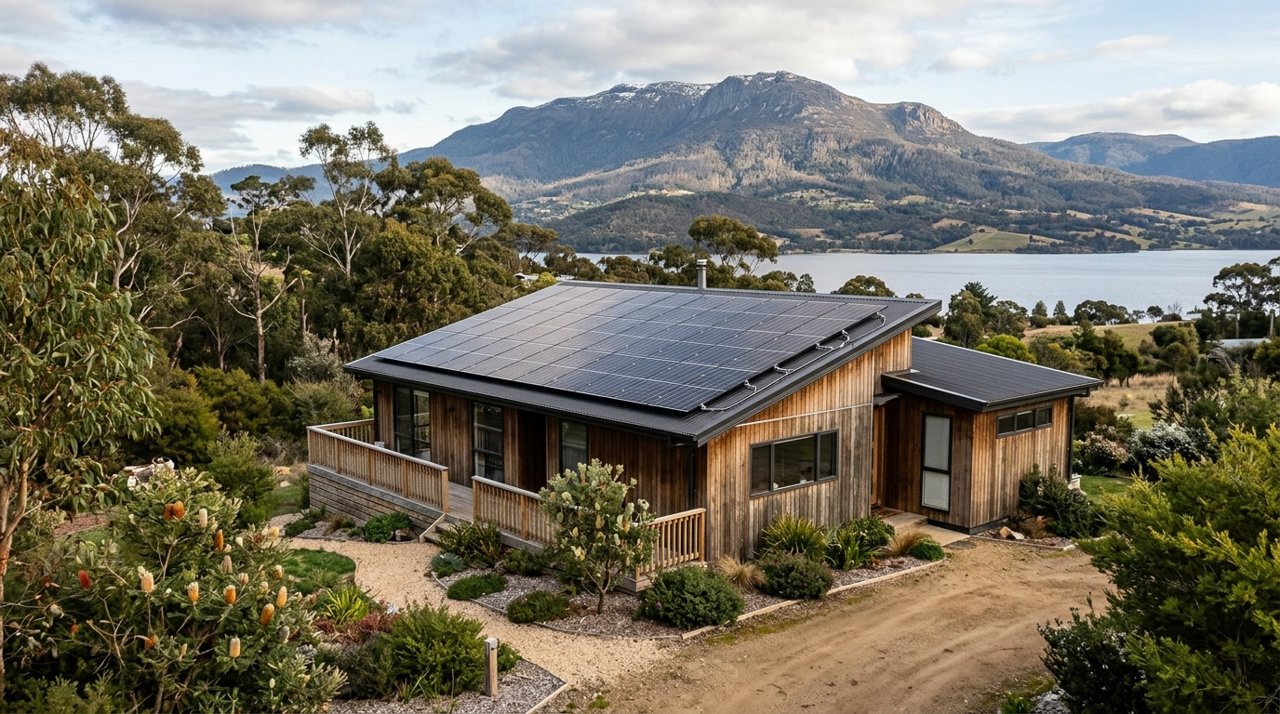
In 2026, Tasmanian homeowners can claim two federal incentives — the STC rebate that discounts the upfront cost of solar panels, and the Cheaper Home Batteries Program that discounts eligible batteries — plus a regulated feed-in tariff for the power you export. There is no separate Tasmanian state rebate for solar or batteries. Here is what each one actually means for a Tasmanian household.
What rebates and incentives can Tasmanians actually claim in 2026?
Tasmanians can access two federal programs and one regulated tariff: the STC rebate on solar panels, the Cheaper Home Batteries Program discount on eligible batteries, and the regulated feed-in tariff paid for exported power. In short:
- The STC rebate (Small-scale Renewable Energy Scheme) — an upfront discount on solar panel systems, usually applied at point of sale.
- The Cheaper Home Batteries Program — a federal discount of around 30% on eligible batteries, running since 1 July 2025.
- The regulated solar feed-in tariff — a modest credit for exported power, set at 9.276 cents per kWh from 1 July 2026.
There is currently no separate Tasmanian state rebate for panels or batteries, so be cautious of any advertising that implies one exists.
How does the federal STC rebate work in Tasmania?
The STC rebate is an upfront discount built into almost every solar quote in Australia — in most cases the installer handles the paperwork and simply reduces your price, so you rarely have to claim anything yourself. Tasmania sits in STC Zone 4, which affects how many certificates a system creates.
The number of certificates steps down each year until the scheme ends in 2030, so the discount gradually shrinks over time — one reason waiting rarely makes solar cheaper. When comparing quotes, it is worth checking the STC discount appears as a clear line item.
How much is the Tasmanian solar feed-in tariff in 2026?
From 1 July 2026, the regulated feed-in tariff for Aurora Energy residential customers is 9.276 cents per kWh, up from around 8.9 cents. That is fair by national standards — but it is still well below the roughly 28 to 30 cents per kWh most households pay for grid power.
The practical lesson: the real value of solar in Tasmania comes from using your own power, not exporting it. Every kWh you self-consume avoids buying at the retail rate; every kWh you export earns the lower feed-in rate. Simple shifts that lift self-consumption include:
- Running the dishwasher, washing machine and pool pump during daylight hours
- Setting hot water and heat pumps to work in the middle of the day
- Scheduling EV charging for sunny hours, if you have an EV
What does the Cheaper Home Batteries Program offer?
The federal Cheaper Home Batteries Program, which began on 1 July 2025, takes roughly 30% off the cost of an eligible home battery paired with solar. In 2026, the discount works out at about $250 per usable kWh at the full rate for the first 14 kWh of capacity, stepping down to 60% of that rate for 14–28 kWh and 15% for 28–50 kWh, with a 50 kWh cap.
The discount tapers each year until 2030, and the battery must be installed with (or added to) a solar system. Eligibility depends on the equipment and installation meeting program rules, so confirm the specifics for your situation before counting on it.
Is a home battery worth it in Tasmania?
Honestly, batteries tend to pay back more slowly in Tasmania than on the mainland, because our power prices are relatively cheap and our feed-in tariff is relatively fair — the gap a battery exploits is smaller here. For a typical household on a standard Aurora tariff, a battery’s value is mostly extra self-consumption plus blackout backup.
No vendor or retailer virtual power plant (VPP) program currently operates in Tasmania. What does exist is wholesale spot-passthrough retailing, where your prices follow the market; with automated battery control, a battery can charge when spot prices go negative and avoid buying at peak. Solar Generation runs exactly this strategy on its own systems, but it suits engaged households who are comfortable with variable pricing.
What size system should a Tasmanian home consider in 2026?
For most homes planning to electrify — an EV, heat pump hot water, induction cooking — around 13 kW of panels on a 10 kW inverter has become the sensible default, replacing the old 6.6 kW standard. This uses the 133% inverter oversizing rule, and because TasNetworks allows a 10 kW single-phase inverter, most Tasmanian homes do not need a three-phase upgrade.
Be honest with yourself, though: a low-use household with no battery, EV or electrification plans may be better served by a smaller, cheaper system. Bigger is only better if you will actually use the power.
How do the incentives compare at a glance?
| Incentive | Who runs it | What it does | Status in Tasmania |
|---|---|---|---|
| STC rebate (SRES) | Federal government | Upfront discount on solar panels | Available; Tasmania is Zone 4 |
| Cheaper Home Batteries Program | Federal government | Roughly 30% off eligible batteries | Available since 1 July 2025 |
| State battery rebate | Tasmanian Government | — | None currently |
| Regulated feed-in tariff | State-regulated, paid via Aurora Energy | Credit for exported solar | 9.276 c/kWh from 1 July 2026 |
How long does solar take to pay for itself in Tasmania?
For a well-matched solar-only system, payback of roughly four to six years is commonly quoted in Tasmanian conditions — but your actual outcome depends on how much of your solar you use directly, your tariff and your roof. The battery portion typically takes longer, often quoted in the range of seven to twelve years, for the reasons explained above.
Treat any precise payback promise with caution, and always ask what assumptions sit behind the number.
The practical takeaway
The 2026 picture is simpler than it looks: the federal incentives are real and worth understanding, but the biggest “rebate” in Tasmania is the one you give yourself by using your own solar power. Size your system for the home you are becoming, not just the home you are today.
This guide is written by the Tasmanian solar team at Solar Generation Tasmania — locals who are always happy to answer questions and help you make sense of your options.
#solargentas #solargen #solargenerationtasmania
Published by Solar Generation Tasmania. General information current as at publication — rebates, tariffs and prices change, so confirm current figures before deciding.
Thinking about solar for your place?
Tell us a little about your home and a local Tasmanian installer will put together a free, no-obligation assessment — system, battery and the rebates you qualify for.
- Honest advice for Tasmanian conditions (Zone 4 sun, hydro grid)
- We apply every rebate you’re eligible for
- Local installers — not a mainland call centre
- SAA-accredited, with degree-qualified owners and 10+ years in tech & solar