
← Blog · 11 September 2026
What Happens to Solar Export When the Grid Is Full? Explained Simply
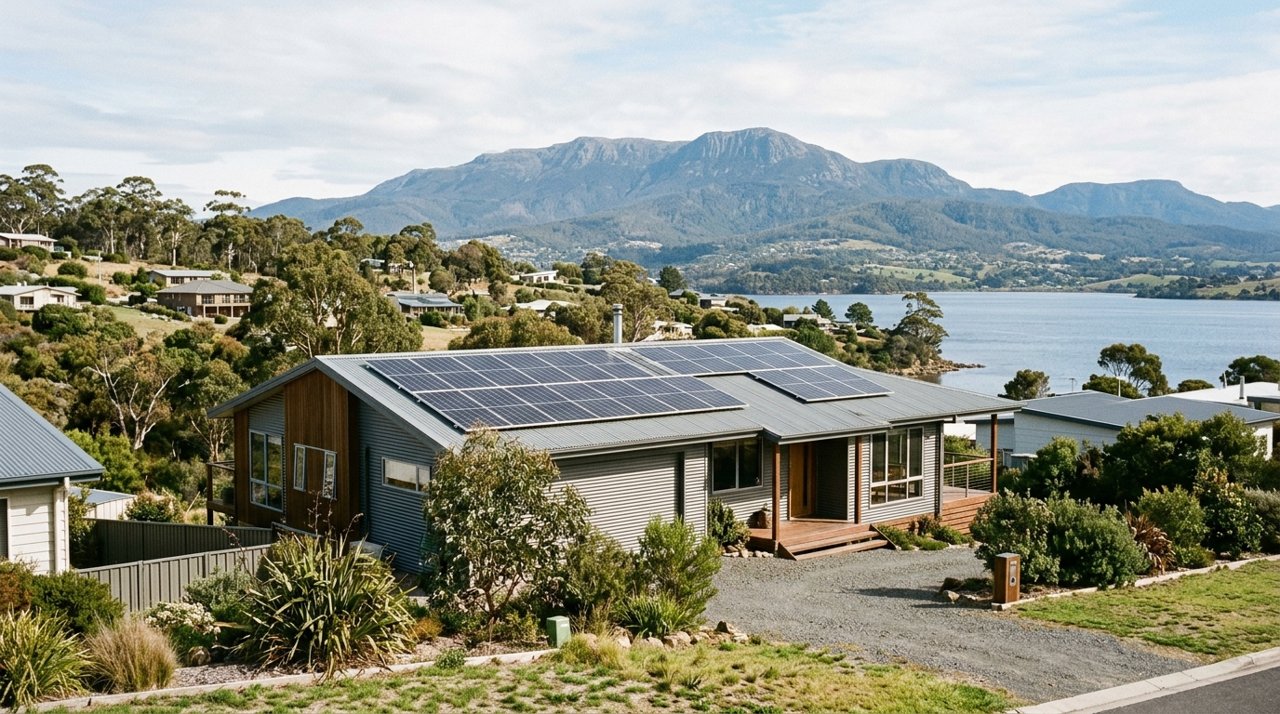
When the grid is “full”, two things can happen: your inverter may be asked to limit how much solar it exports, or it may gently wind itself back when local voltage climbs too high. Either way, your home keeps using its own solar, your lights stay on, and only the surplus sent back to the street is affected.
And here’s the reassuring part for Tasmanians: because the feed-in tariff is modest compared with what grid power costs, exports are the least valuable part of your solar anyway. Most of the value comes from using your own power — and that never gets capped.
What actually happens when the grid is “full”?
Electricity supply must match demand in real time, and local networks were built for power flowing one way — into homes. When lots of rooftop solar pushes power back into a street’s network on a mild, sunny day, voltage rises. Inverters automatically reduce output in response, and network companies can also cap how much a system may export.
A few things you might notice (or never notice at all):
- Gentle throttling. Modern inverters are required under Australian standards to smoothly reduce output as grid voltage climbs. You usually won’t know it’s happening.
- A brief trip. If voltage stays too high, an inverter can switch itself off for safety, then restart once things settle. Annoying, but harmless.
- An export limit on your connection. For some new or larger systems, the network can set a fixed or flexible cap on how much you’re allowed to push back into the grid.
- Nothing changes inside your home. Self-consumption is never limited. Your solar runs your fridge, hot water and heat pump exactly the same.
Does the grid really fill up in Tasmania?
Yes — though it’s usually a local, patchy thing rather than the whole state at once. Streets and suburbs with lots of rooftop solar can hit their limits on bright, mild days when everyone’s generating and nobody’s using much. The statewide grid has plenty of capacity; it’s the neighbourhood wires that feel the squeeze.
TasNetworks, which owns the poles and wires, sets the connection rules. Many homes connect with straightforward export arrangements, but export limits can apply in constrained areas or for larger systems. It’s worth asking your installer to confirm the export conditions on your specific connection before you sign anything.
Will export limits cost me much?
Usually less than people fear — and here’s why. From 1 July 2026, the regulated feed-in tariff for Aurora Energy residential customers is 9.276 cents per kWh (up from about 8.9 cents). Grid power, by contrast, costs roughly 28–30 cents per kWh. Every unit of solar you use yourself avoids buying at that retail rate; every unit you export earns the smaller feed-in rate.
| Self-consumed solar | Exported solar | |
|---|---|---|
| What it’s worth | Avoids buying grid power at roughly 28–30 c/kWh | Earns the feed-in tariff — 9.276 c/kWh from 1 July 2026 |
| Affected when the grid is full? | No — never limited | Yes — can be throttled or capped |
So an export limit trims the lower-value side of the equation. A well-designed system that matches your daytime usage keeps most of its worth even if exports are occasionally curtailed.
What size system still makes sense?
For most homes planning to electrify — an EV, a heat pump, induction cooking — around 13 kW of panels on a 10 kW inverter is the sensible, future-proof default. That’s about the most panel you can fit under the 133% inverter oversizing rule, and TasNetworks permits a 10 kW single-phase inverter, so most homes don’t need three-phase power.
A bigger panel array earns its keep in winter and in the mornings and evenings — exactly when a smaller system runs short. If exports get clipped on the odd perfect spring afternoon, that barely dents the overall picture. To be fair, though: a very low-use household with no battery, no EV and no electrification plans may genuinely be better served by a smaller, cheaper system.
Is a battery worth it in Tasmania?
It can be, but go in with clear eyes. A battery solves the grid-full problem neatly: instead of exporting surplus at feed-in rates (or having it curtailed), you store it and use it after dark — plus you get backup in an outage.
On costs: the federal Cheaper Home Batteries Program, running since 1 July 2025, can take around 30% off an eligible battery — roughly $250 per usable kWh at the full 2026 rate for the first 14 kWh, with smaller shares for larger batteries up to a 50 kWh cap. It tapers each year to 2030, the battery must be paired with solar, and eligibility conditions apply. There is no separate Tasmanian state rebate.
On returns, honesty matters: Tasmania’s relatively cheap power and fair feed-in tariff mean batteries pay back more slowly here than on the mainland. As a rough guide, households often see payback of around four to six years for solar panels and seven to twelve years for a battery — but your numbers will depend on your usage, your tariff and your quotes. No vendor-run VPP program operates in Tasmania yet. Wholesale spot-passthrough retailing does exist, and automated battery control can charge when spot prices go negative and avoid peak imports — Solar Generation runs exactly this on its own systems — but for a typical Aurora household, the value is self-consumption plus backup.
How can I use more of my own solar?
This is the highest-value habit you can build, export limits or not:
- Run the dishwasher, washing machine and dryer in the middle of the day (timers help).
- Set your hot water or heat pump to heat during solar hours.
- Charge the EV in daylight hours when it’s home.
- Pre-heat or pre-cool the house before the evening peak.
- If you have a battery, let it soak up the midday surplus automatically.
The federal STC rebate (Tasmania is in Zone 4) still discounts the upfront cost of eligible systems, which helps whichever size you choose.
So, what’s the practical takeaway?
A full grid limits your exports — never your own use — and exports are the least valuable part of rooftop solar in Tasmania anyway. Size your system around self-consumption and your future plans, ask about export conditions before you commit, and treat a battery as a considered upgrade rather than a must-have. Do that, and export limits will be a footnote, not a dealbreaker.
This guide was written by the Tasmanian solar team at Solar Generation Tasmania — locals who are always happy to answer questions from Tasmanians weighing up solar.
#solargentas #solargen #solargenerationtasmania
Published by Solar Generation Tasmania. General information current as at publication — rebates, tariffs and prices change, so confirm current figures before deciding.
Thinking about solar for your place?
Tell us a little about your home and a local Tasmanian installer will put together a free, no-obligation assessment — system, battery and the rebates you qualify for.
- Honest advice for Tasmanian conditions (Zone 4 sun, hydro grid)
- We apply every rebate you’re eligible for
- Local installers — not a mainland call centre
- SAA-accredited, with degree-qualified owners and 10+ years in tech & solar