
← Blog · 23 July 2026
Tasmanian Solar Feed-in Tariff Rises Amid National Battery Rebate Overhaul
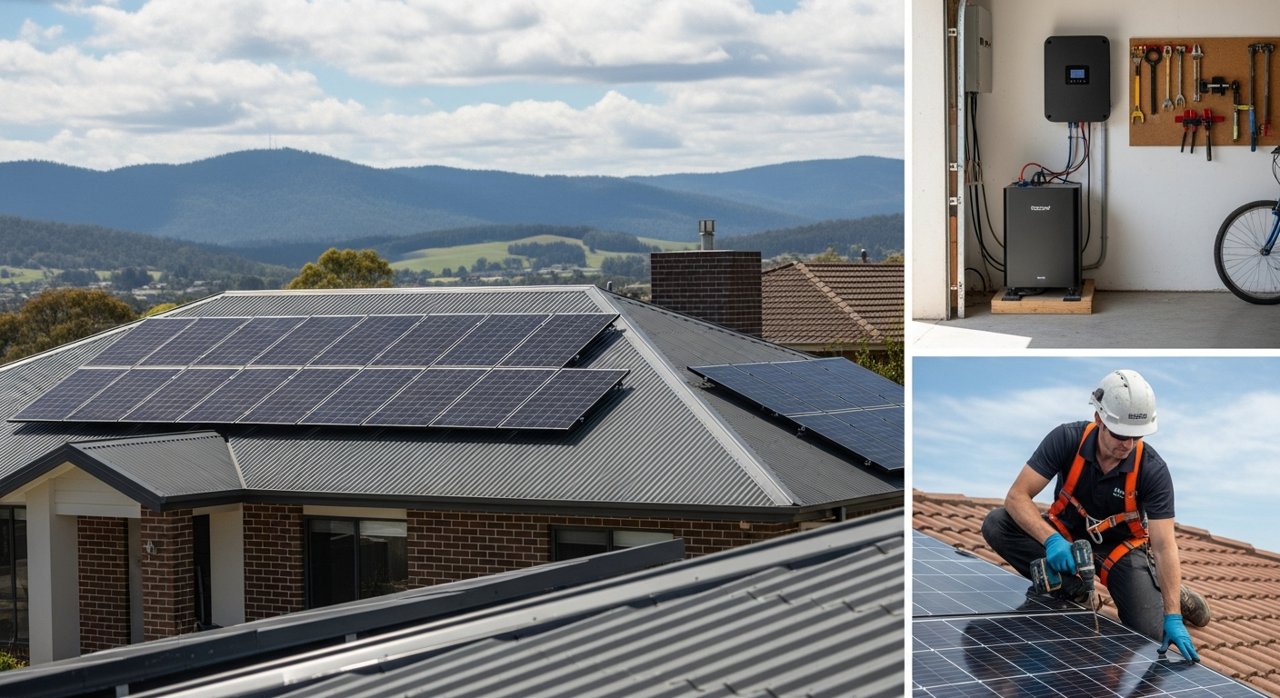
A series of regulatory and federal policy changes in late June and July 2026 have shifted the landscape for Tasmanians considering solar power and battery storage. Key developments include a state-regulated increase to the solar feed-in tariff, an overhaul of the federal battery subsidy, and a new long-term national energy plan that reinforces the central role of household solar.
Effective from 1 July, the minimum feed-in tariff for residential solar owners in Tasmania increased by 5.6 per cent to 9.276 cents per kilowatt-hour (kWh). The Office of the Tasmanian Economic Regulator (OTTER) confirmed the new rate for the 2026-27 financial year, attributing the rise to increases in the wholesale electricity price and other market costs. This change means homeowners will receive a slightly higher credit for the surplus electricity they export to the grid.
However, this was accompanied by a general rise in power prices. On the same day, as set by the Regulator, Aurora Energy’s standing offer electricity prices for residential and small business customers increased by an average of 4.23 per cent. For a homeowner, this rise in the cost of drawing power from the grid increases the financial benefit of ‘self-consumption’—using the solar power generated on their own roof to avoid buying more expensive electricity from the grid.
On the national front, the federal government’s Cheaper Home Batteries Program, which provides a point-of-sale discount on new battery installations, is now operating under significant changes that took effect on 1 May and are the current standard for installations. According to the Department of Climate Change, Energy, the Environment and Water, the subsidy is now structured in tiers. The full support value applies to the first 14kWh of a battery’s usable capacity, with a reduced rate of 60 per cent applying to capacity between 14kWh and 28kWh.
The Clean Energy Regulator administers the program, which is an expansion of the Small-scale Renewable Energy Scheme (SRES). The value of the rebate is designed to decrease over time, with the support factor scheduled to decline every six months to keep pace with falling battery costs. For a Tasmanian homeowner, this means the federal incentive is now more strongly geared towards typical household-sized batteries, and the value of the rebate will be higher for systems installed sooner rather than later.
Looking at the bigger picture, the Australian Energy Market Operator (AEMO) in late June released its 2026 Integrated System Plan (ISP), a comprehensive roadmap for the national grid’s transition. The plan forecasts a massive five-fold increase in distributed solar (mostly rooftop) to 87 gigawatts by 2050, highlighting that consumer-owned systems are fundamental to the future of the National Electricity Market. AEMO also reported that the 2025-26 financial year saw a record 9.1 gigawatts of new large-scale renewable and storage projects completed nationally. This long-term strategic reliance on home solar and batteries by the national operator suggests their role and value in maintaining grid stability is set to grow.
One national initiative not currently affecting Tasmania is the “Solar Sharer Offer,” which began on 1 July. This program requires energy retailers in some mainland states (NSW, South Australia, and South East Queensland) to offer plans with three hours of free electricity during the middle of the day. This offer is tied to the Default Market Offer
#solargentas #solargen #solargenerationtasmania
Published by Solar Generation Tasmania. General information current as at publication — rebates, tariffs and prices change, so confirm current figures before deciding.
Thinking about solar for your place?
Tell us a little about your home and a local Tasmanian installer will put together a free, no-obligation assessment — system, battery and the rebates you qualify for.
- Honest advice for Tasmanian conditions (Zone 4 sun, hydro grid)
- We apply every rebate you’re eligible for
- Local installers — not a mainland call centre
- SAA-accredited, with degree-qualified owners and 10+ years in tech & solar