
← Blog · 26 July 2026
Tasmania's Solar Feed-in Tariff Rises, Power Prices Climb From July 1
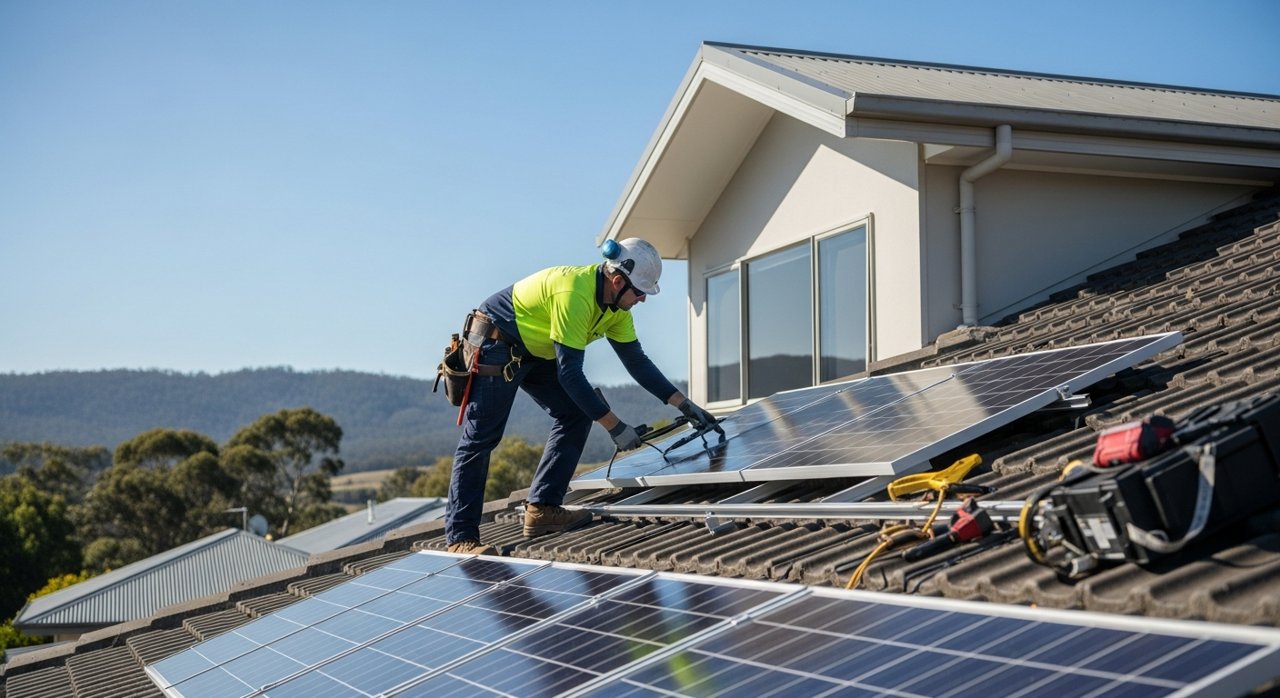
A series of regulatory and market changes in late June and early July 2026 have altered the financial landscape for Tasmanian homeowners with or considering solar power. Key developments include a state-regulated increase to the solar feed-in tariff, a rise in general electricity prices, and the national release of a long-term energy plan by the Australian Energy Market Operator (AEMO) that reinforces Tasmania’s role in the grid.
Effective 1 July 2026, the minimum feed-in tariff—the rate solar owners are paid for exporting surplus power to the grid—rose by 5.6 per cent to 9.276 cents per kilowatt-hour (kWh). The Office of the Tasmanian Economic Regulator (OTTER) announced the change, attributing the higher rate to increases in the wholesale electricity price and other market costs. This is the second component of the annual price reset; retailer Aurora Energy also confirmed that its regulated standing offer electricity prices increased by an average of 4.23 per cent from the same date. For a Tasmanian household, this dual change makes self-consumed solar power more valuable, as it offsets a higher electricity price, while also increasing the return on power sent back to the grid.
On the national level, federal incentives for solar and batteries remain, though their structures continue to evolve. The primary subsidy for solar panels, the Small-scale Renewable Energy Scheme (SRES), continues to provide an upfront discount on new systems. However, as part of a scheduled phase-out, the value of this rebate decreases on January 1 each year. The current “deeming period” used to calculate the rebate is five years, but this will drop to four years in 2027, slightly reducing the discount for those who wait.
For energy storage, the federal Cheaper Home Batteries Program remains the only available rebate in Tasmania, following the closure of the state’s Energy Saver Loan Scheme in 2025. A significant change to the battery program, announced by the federal government, took effect on 1 May 2026. The rebate now operates on a tiered system. The highest rate of support, around $271 per kWh, applies to the first 14 kWh of battery capacity, according to industry analysis. The subsidy rate then steps down for larger capacity, meaning a typical 10-14 kWh home battery receives the most proportional support.
Significant structural changes are also occurring within Tasmania’s connection to the national grid. On 1 July 2026, the Basslink interconnector officially became a fully regulated asset under the control of AEMO. This fundamentally alters how energy flows between Tasmania and Victoria are managed and priced, moving from a commercial model to one directed by the national market operator. This is seen as a precursor to how the proposed Marinus Link interconnector will operate.
Reinforcing this direction, AEMO published its 2026 Integrated System Plan (ISP) on 25 June 2026. The ISP is the official roadmap for the energy transition, and it reaffirms that a grid based on renewables, transmission, and storage is the lowest-cost path forward. The plan specifically identifies the expansion of Tasmania’s Renewable Energy Zone (REZ) as a key project, signalling long-term confidence in the state’s renewable generation capacity.
While not yet affecting Tasmania, a notable development on the mainland from 1 July was the introduction of the “Solar Sharer Offer” in New South Wales, South Australia, and South-East Queensland. Mandated by the energy regulator, this requires retailers to offer plans with a three-hour window of free electricity during the middle of the day to utilise abundant solar generation. Federal government sources have indicated that extending this or a similar offer to other regions is under consideration for the future.
These recent changes present a mixed but clear picture of the evolving energy market for Tasmanian homeowners.
#solargentas #solargen #solargenerationtasmania
Published by Solar Generation Tasmania. General information current as at publication — rebates, tariffs and prices change, so confirm current figures before deciding.
Thinking about solar for your place?
Tell us a little about your home and a local Tasmanian installer will put together a free, no-obligation assessment — system, battery and the rebates you qualify for.
- Honest advice for Tasmanian conditions (Zone 4 sun, hydro grid)
- We apply every rebate you’re eligible for
- Local installers — not a mainland call centre
- SAA-accredited, with degree-qualified owners and 10+ years in tech & solar