
← Blog · 12 October 2026
Tasmania's Feed-in Tariff vs Every Other State: Where Tasmania Really Ranks
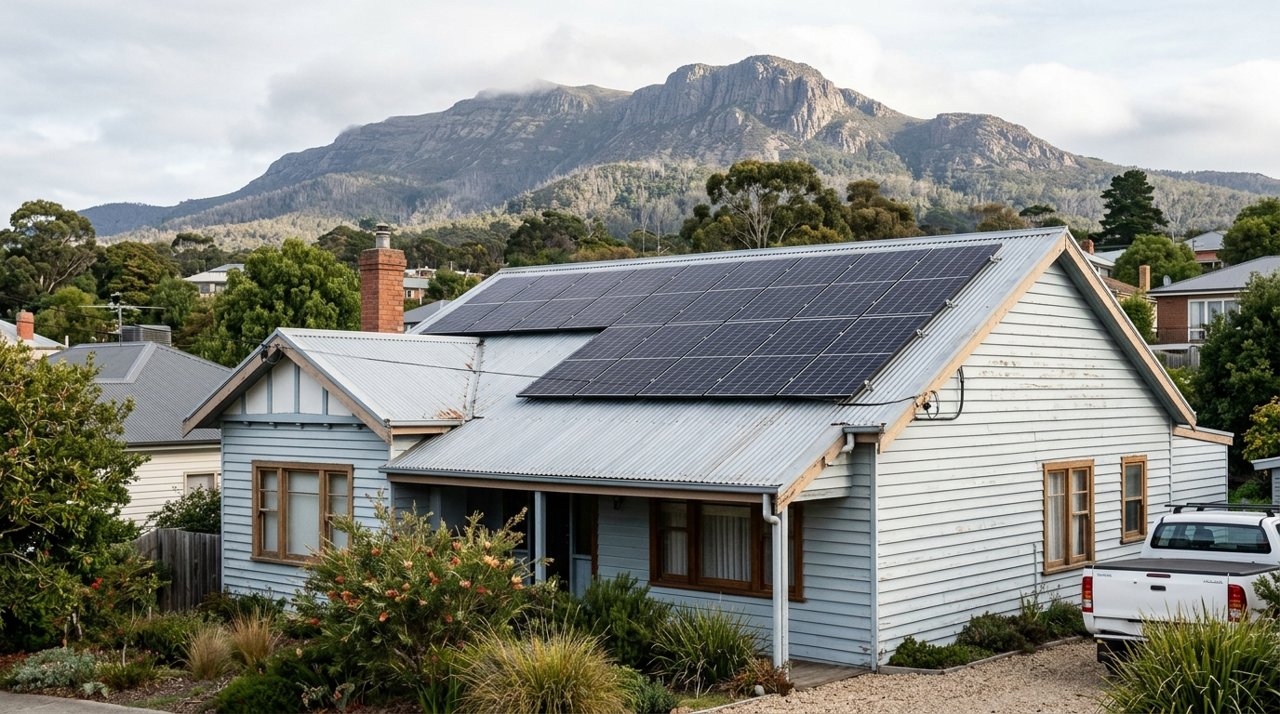
Tasmania’s regulated feed-in tariff of 9.276 c/kWh (from 1 July 2026) is the highest flat, all-day rate of any Australian state — but that doesn’t mean solar works the same way here as on the mainland. What matters most for a Tasmanian household isn’t what you’re paid for exporting; it’s how much of your own solar you use yourself. Here’s how the states actually compare, and what it means for your roof.
How does Tasmania’s feed-in tariff compare to other states?
Tasmania ranks first among the states for a flat, all-day feed-in tariff. The Tasmanian Economic Regulator (OTTER) set the 2026-27 regulated minimum at 9.276 c/kWh (ex GST), which Aurora Energy must pay at least that much to eligible customers. That’s above the top of IPART’s NSW benchmark range (6.5 c/kWh) and well above Queensland’s regulated regional rate (6.006 c/kWh).
Here’s the honest, state-by-state picture:
| State | Feed-in tariff situation | Rate |
|---|---|---|
| Tasmania | Regulated minimum, flat all-day (OTTER) | 9.276 c/kWh |
| NSW | No mandated rate; IPART benchmark is a guide only | 3.4–6.5 c/kWh |
| Victoria | Retailer-set since 1 July 2025; floor is 0.00 c/kWh | Average retailer minimum near 0.8 c/kWh (third-party analysis, July 2026) |
| Queensland (regional) | Regulated rate for Ergon network (QCA) | 6.006 c/kWh |
| Queensland (SEQ) | No mandated minimum | Median around 2 c/kWh (comparison-site analysis, Sept 2026) |
| South Australia | Retailer-set | Median around 1 c/kWh (comparison-site analysis, Sept 2026) |
| Western Australia | DEBS time-of-use (Synergy) | 10 c/kWh (3–9pm), 2 c/kWh otherwise, first 50 kWh/day |
| ACT | Retailer-set | Typically 4–10 c/kWh (comparison-site analysis, July 2026) |
Only Western Australia’s evening window pays more than Tasmania — 10 c/kWh between 3pm and 9pm — but WA pays just 2 c/kWh the rest of the day. For a flat rate you can rely on around the clock, Tasmania leads.
Why is Tasmania’s feed-in tariff higher than the mainland’s?
It comes down to how the rate is set. The OTTER calculates a regulated minimum based on wholesale energy costs, network losses and market costs — and its 2026-27 determination raised the rate 5.6% above the 2025-26 figure of 8.782 c/kWh, which the regulator attributes to higher loss factors, AEMO costs and wholesale prices.
Most mainland states have moved away from regulated minimums entirely. Victoria’s Essential Services Commission stopped setting one from 1 July 2025, leaving retailers free to pay as little as zero. Queensland’s regional rate (set by the QCA) actually fell 31% for 2026-27. Tasmania, by contrast, still has a regulated floor that the state’s main retailer must meet.
The rate has moved around a bit over recent years, per OTTER’s determinations:
- 2023-24: 10.869 c/kWh
- 2024-25: 8.935 c/kWh
- 2025-26: 8.782 c/kWh
- 2026-27: 9.276 c/kWh
So while Tasmania’s rate is genuinely the best flat rate going, it isn’t set in stone — it’s reviewed annually.
Will my solar system actually get the feed-in tariff?
Not automatically — eligibility is conditional. According to the OTTER, the regulated rate applies to systems that comply with the AS4777 inverter standard, have proper import/export metering, and are no larger than 10 kVA single-phase or 30 kVA three-phase.
The good news for most Tasmanian homes: TasNetworks allows a 10kW single-phase inverter, so a typical residential system fits comfortably within the single-phase limit without needing a three-phase upgrade. If you’re planning a larger system, it’s worth confirming your setup meets these requirements before you sign anything.
Does a higher feed-in tariff mean solar pays off faster in Tasmania?
Only partly. Here’s the thing that matters more than the tariff comparison: your feed-in tariff is still far below what you pay to import electricity. Aurora’s retail import price is roughly 28-30 c/kWh, while exports earn 9.276 c/kWh. Every kilowatt-hour of solar you use yourself avoids an import at three times what you’d earn exporting it.
That flips the strategy. On the mainland, where feed-in tariffs have collapsed to 1-3 c/kWh in several states, the maths is brutal: export almost nothing of value. In Tasmania, exporting isn’t worthless — it’s just worth much less than self-consumption. So the ranking is real, but the lesson is the same everywhere:
- Self-consumption first — shift usage (dishwasher, washing machine, heat pump hot water if you can time it) into solar hours.
- Tariff second — the feed-in tariff is a bonus for what you can’t use, not the main game.
- Check your own bill — the actual rate you’re on is what counts, not the headline.
Which Tasmanian electricity tariff should solar households look at?
Most Tasmanian homes are now on Tariff 93, the residential time-of-use tariff that’s been the default for new and upgraded connections since 1 July 2024. Its peak windows are weekdays 7-10am and 4-9pm (8-11am and 5-10pm during daylight saving), with everything else — including all weekend — off-peak.
Solar households should also know about Tariff 97, the opt-in tariff for homes with solar, a battery or an EV. It’s the only Tasmanian tariff with a super off-peak rate from midnight to 4am every day, including weekends — handy for charging an EV or battery overnight. Its trade-off is a longer evening peak (weekdays 4-10pm) and an excess demand charge above 8.5 kW, so it suits some households and not others. Availability depends on your retailer.
If you’re on the legacy pair — Tariff 31 (flat general light and power) and Tariff 41 (the separately metered flat rate for hard-wired heating and hot water) — you can stay put; they closed to new installations on 30 June 2024 but remain available to existing homes.
What about batteries — does Tasmania’s good feed-in tariff make them less worthwhile?
Honestly, yes, a bit. A battery’s core job is shifting cheap or free solar into expensive evening hours. In Tasmania, both sides of that equation are softer than on the mainland: our power is relatively cheap, and our feed-in tariff is relatively fair. That means the battery portion of a solar-plus-storage setup typically takes longer to pay back here — often in the range of 7-12 years, versus roughly 4-6 years for solar alone.
The federal Cheaper Home Batteries Program (from 1 July 2025) helps, taking roughly 30% off an eligible battery when paired with solar — about $250 per usable kWh in 2026 at the full rate for the first 14 kWh, tapering for larger sizes and each year to 2030. There’s no separate Tasmanian state battery rebate. Eligibility conditions apply, so check the current program details before relying on it.
There’s one wrinkle worth knowing: no vendor or retail VPP program operates in Tasmania, but some retailers offer spot-price passthrough. With automated battery control, a battery can charge when wholesale prices go negative and avoid peak imports — Solar Generation runs exactly this on its own systems. For a typical Aurora-tariff household without spot exposure, the value of a battery is self-consumption plus outage backup, and that’s a perfectly reasonable reason to want one in a state where the grid can go down in a storm.
What size solar system makes sense in Tasmania?
For most homes planning to electrify — an EV, heat pump heating, induction cooking — a system around 13kW of panels on a 10kW inverter (using the 133% inverter oversizing rule) is the sensible, future-proof default. It’s a step up from the old 6.6kW standard, and it’s what lets you actually cover an EV and winter heating rather than just your daytime basics.
The federal STC rebate (under the SRES) still discounts upfront system cost, and Tasmania sits in STC Zone 4. Be honest with yourself, though: if you’re a low-usage home with no battery, EV or electrification plans, a smaller system may genuinely suit you better. Bigger isn’t automatically smarter.
The practical takeaway
Tasmania genuinely ranks first for feed-in tariffs — a regulated 9.276 c/kWh, flat, all day, backed by the OTTER and paid by Aurora. But don’t let a good export rate lull you into exporting most of your power. The winning formula here is the same as everywhere: size the system to what you’ll actually use, shift your usage into daylight hours, pick the right tariff (93 by default, 97 if your usage pattern suits it), and treat exports as the bonus, not the plan. Check the feed-in rate printed on your own bill, and if you’re weighing a battery, go in with realistic expectations about payback in a state with fair power prices.
This guide is written by the Tasmanian solar team at Solar Generation Tasmania — if you’ve got questions about any of it, we’re always happy to help.
#solargentas #solargen #solargenerationtasmania
Published by Solar Generation Tasmania. General information current as at publication — rebates, tariffs and prices change, so confirm current figures before deciding.
Thinking about solar for your place?
Tell us a little about your home and a local Tasmanian installer will put together a free, no-obligation assessment — system, battery and the rebates you qualify for.
- Honest advice for Tasmanian conditions (Zone 4 sun, hydro grid)
- We apply every rebate you’re eligible for
- Local installers — not a mainland call centre
- SAA-accredited, with degree-qualified owners and 10+ years in tech & solar