
← Blog · 14 September 2026
Solar Panel Cleaning and Maintenance in Tasmania Explained Simply
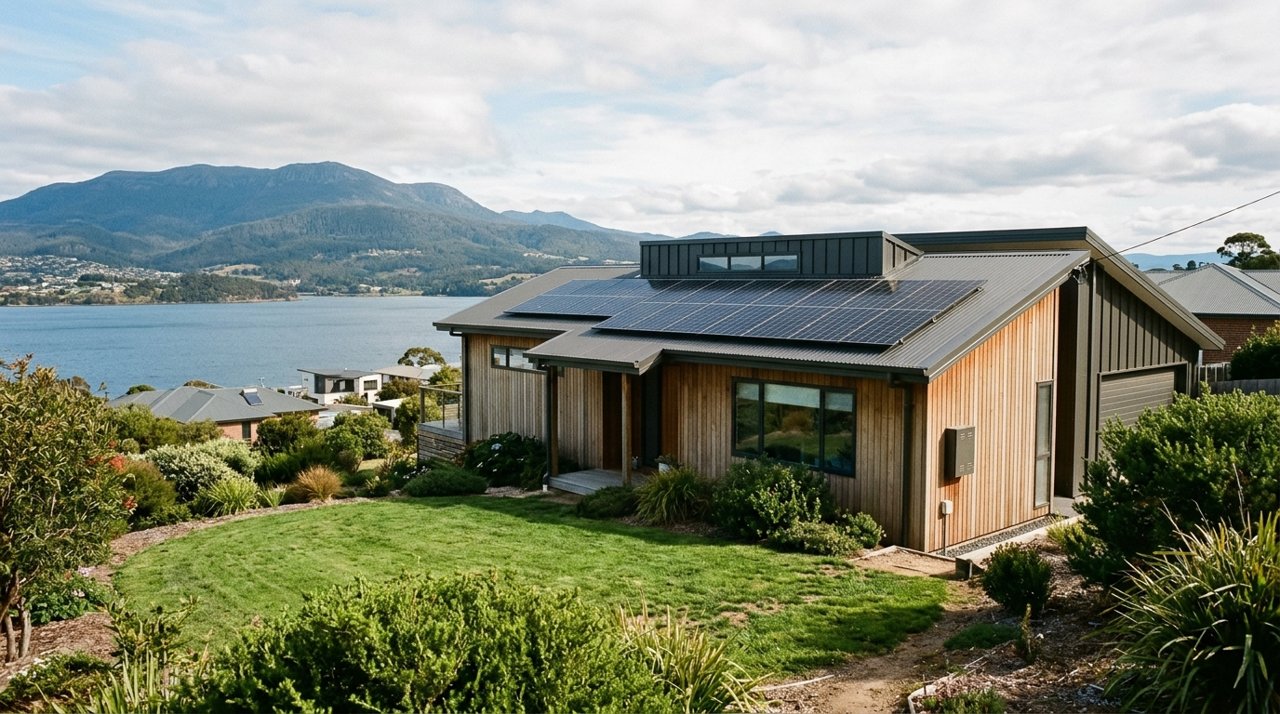
The good news first: solar panels are among the lowest-maintenance things you can put on a Tasmanian home. There are no moving parts and nothing to service like a car, and our rain does a fair bit of the cleaning for you. But “fit and forget” isn’t quite true either — a little attention a couple of times a year keeps your system producing the power, and the bill savings, you paid for.
Do solar panels in Tasmania actually need cleaning?
Yes — but only occasionally, and usually only when you can see the reason. Rain rinses off loose dust, yet it won’t shift bird droppings, lichen, sticky pollen film, or the salt crust that slowly builds on coastal roofs. If your panels look dull or patchy from the street, they’re generating less than they should.
This matters more in Tasmania than you might think. The regulated feed-in tariff is modest — at the time of writing, a little over nine cents per kilowatt-hour — while buying power from the grid costs roughly three times that. The real value of a home system is the power you use yourself, so every kilowatt-hour lost to grime is effectively one you end up buying back at the full retail price.
How often should solar panels be cleaned in Tasmania?
For most homes, a visual check every six months and a gentle clean about once a year is a sensible rhythm. Some properties need more frequent attention. Plan to clean more often if your place is:
- Within a few hundred metres of the coast, where salt spray leaves a film rain won’t remove
- Near unsealed roads, paddocks or building sites, where dust settles quickly
- Under or near trees, which drop sap, leaves and pollen — and attract birds
- In areas with heavy wood-heater smoke or near planned burns
- Fitted with panels at a fairly shallow tilt, where grime and lichen settle instead of washing away
A simple rule: after a long dry spell, step outside and look up. If you can see a film, the panels can feel it.
Can I clean solar panels myself?
A light clean from the ground is a reasonable DIY job; anything involving climbing onto the roof is best left to professionals. Panels generate electricity whenever light hits them, roofs are slippery, and a fall costs far more than any clean.
For the DIY version:
- Pick a cool, overcast morning so the glass isn’t hot
- Use a garden hose and a soft brush on an extension pole
- Plain water is usually enough; a little mild detergent helps with greasy film
- Never use a high-pressure washer — it can force water past seals
- Never use abrasive scourers or harsh chemicals
- Never stand, kneel or lean on the panels
Check your installation paperwork as well — some panel warranties carry conditions around cleaning, and it’s worth staying inside them.
What maintenance does a solar system need besides cleaning?
Very little, but not nothing. Beyond the occasional wash, solar maintenance is mostly about paying attention:
- Glance at the inverter or monitoring app now and then — a green light and sensible numbers mean all is well
- Keep trees trimmed; shading creeps up quietly as gardens grow
- After big storms, do a ground-level look for damage, loose panels or debris
- Have a licensed professional inspect the system every few years — wiring, isolators and mounting, especially on older systems
- Remember the inverter is the hardest-working part. Panels commonly carry performance warranties measured in decades, while inverters generally carry much shorter ones, so many systems will need one inverter replacement over their life. That’s normal, not a sign of trouble.
What problems are most common in Tasmania — and what should I do about them?
| Problem | What it looks like | What to do |
|---|---|---|
| Dust and pollen film | Dull haze, worse after dry, windy weather | Gentle hose rinse from the ground |
| Bird droppings | White or dark spots, often under wires or trees | Soft brush and water; don’t let them bake on |
| Lichen and moss | Green or black crusty patches, common on flat panels | Soft-brush clean; stubborn growth may need a professional |
| Salt crust (coastal homes) | White, slightly sticky film | Fresh-water rinse; clean more often than inland homes |
| Leaves and shading | Litter caught around panels, new midday shadows | Trim back growth and clear the gaps |
| Inverter fault | Red light or error message in the app | Note the error code and call your installer |
How do I know if my system is underperforming?
Watch your app and your bill, and compare like with like. Tasmanian seasons are dramatic: winter generation is always much lower than summer because days are short and the sun sits low — that’s normal, not a fault. What deserves a closer look is a sudden drop not explained by season or weather, one section of panels producing noticeably less than the rest, or a power bill creeping up even though your habits haven’t changed.
Comparing this month with the same month last year is far more useful than comparing with last month. If you also have a home battery, its app gives even richer detail about where your power is going.
One honest caveat: a clean won’t transform a healthy system. If your panels are already fairly clean, the gain from washing is small. Cleaning matters most when visible grime has been allowed to build up.
When should I call a professional?
Call a professional for anything above the gutter line, anything electrical, and anything that looks like damage. That includes stubborn lichen, panels on steep or two-storey roofs, suspected storm or hail damage, persistent underperformance you can’t explain, and any inverter error. Fixed electrical work must legally be done by a licensed electrician, and a periodic professional inspection every few years is cheap peace of mind for a system expected to last decades.
What’s the simplest maintenance routine to follow?
Put two reminders in your phone — say, March and September, around the equinoxes. When they go off, walk outside, look up at the panels, and open your monitoring app for two minutes. A spring rinse sets you up for the high-production summer months, and an autumn check catches anything winter should know about. Most solar problems announce themselves early to anyone who simply looks.
This guide was written by the Tasmanian solar team at Solar Generation Tasmania — locals who work with these systems every day and are always happy to answer questions from fellow Tasmanians.
#solargentas #solargen #solargenerationtasmania
Published by Solar Generation Tasmania. General information current as at publication — rebates, tariffs and prices change, so confirm current figures before deciding.
Thinking about solar for your place?
Tell us a little about your home and a local Tasmanian installer will put together a free, no-obligation assessment — system, battery and the rebates you qualify for.
- Honest advice for Tasmanian conditions (Zone 4 sun, hydro grid)
- We apply every rebate you’re eligible for
- Local installers — not a mainland call centre
- SAA-accredited, with degree-qualified owners and 10+ years in tech & solar