
← Blog · 6 September 2026
Solar Generation Tasmania is now an official LocalVolts partner: what it means
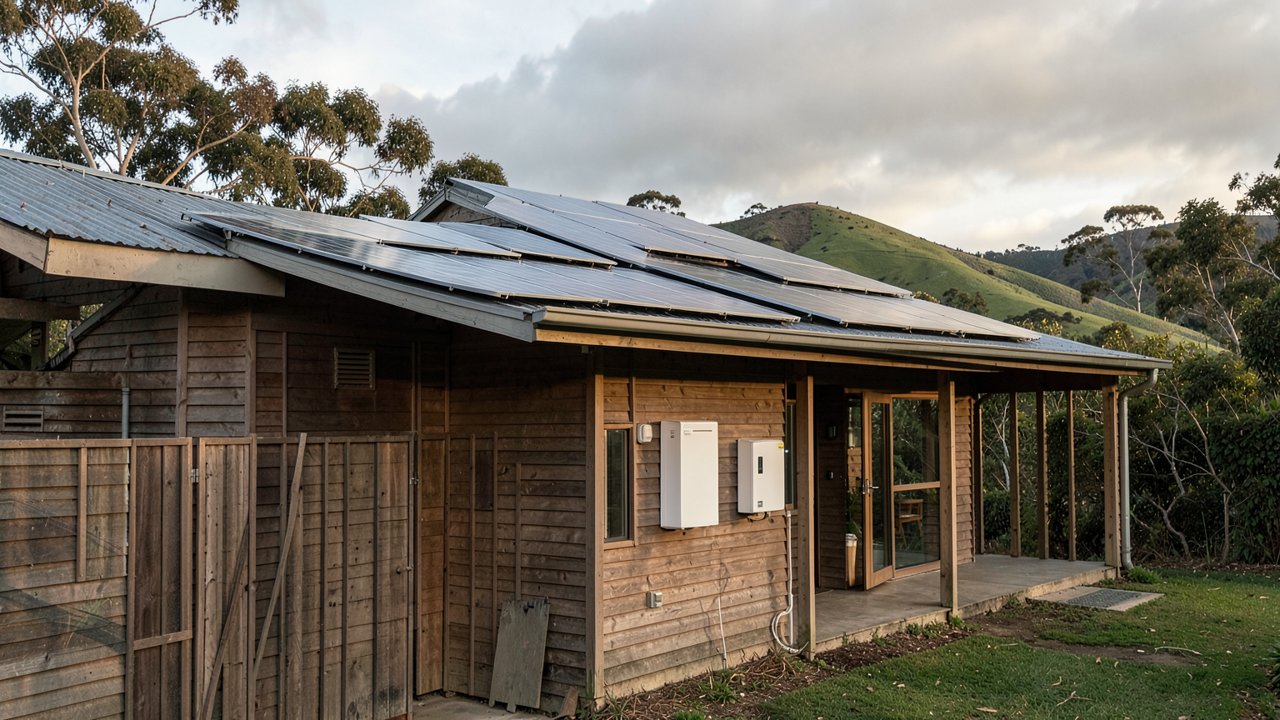
Solar Generation Tasmania is now an official LocalVolts partner. The partnership was set up in late August 2026, and LocalVolts has issued us a partner ID and a data API key.
In plain terms: with a customer’s explicit permission — a quick authorisation they give inside their own LocalVolts account — we can read that customer’s own live LocalVolts prices and meter data through the LocalVolts partner API, and run our AI battery management against those real prices instead of an estimate.
That’s the announcement. The rest of this article is what it means, what it does not mean, and who it actually suits — because it doesn’t suit every household, and we’d rather say so at the top than bury it.
What is LocalVolts, and can I get it in Tasmania?
LocalVolts is an electricity retailer available here in Tasmania where you buy and sell power at the live wholesale market price, updated every few minutes, rather than at one flat rate set for the year. Members can also trade energy peer-to-peer with other members.
Prices move with real supply and demand. When renewable generation is plentiful, prices can be very low — sometimes free, sometimes negative, which means you’re paid to take power off the grid. At the busy times, typically the evening peak, prices go up. That’s the trade-off in one sentence: you get the cheap periods, and you’re also exposed to the expensive ones.
What does a “data partnership” actually mean? Is someone else controlling my battery?
It’s a data partnership, and it is read-only. Here’s the honest boundary:
- We can read your live LocalVolts prices and your meter data — but only after you authorise it yourself, in your own LocalVolts account.
- We do not place trades or orders on the LocalVolts market on your behalf. Not ever, under this partnership.
- You stay a LocalVolts customer, with your own account and your own retailer relationship. Nothing about that changes.
- The only thing that acts on the prices is your own battery, in your own home — charging and holding, the same as it does now, just with better information.
So the partnership doesn’t give us a seat at the market. It gives our battery management the actual price your meter is seeing, instead of a best guess.
What does the AI battery management do with real prices?
Three things, and they’re not complicated:
- Charges when power is cheap, including negative-price events where the grid pays you to take power.
- Holds charge through the expensive evening peaks, so your house runs on stored energy at the times power costs the most.
- Gets the most out of the solar you export, timing what goes out and what stays home.
This is already running on our own home — there’s a live demo on our website showing our actual house: a real battery, real prices, updating in real time. The first customer home is now connected and managed on their own real LocalVolts prices too.
I’m on a standard Aurora tariff — does this do anything for me?
Not directly, and we won’t pretend otherwise. Real-price management only has something to work with if your price actually moves. On a standard retail tariff, your rates are fixed, so there’s nothing to shift into.
The good news is that a battery on a standard tariff still earns its keep — just through different mechanisms:
| Your situation | Where the battery value comes from |
|---|---|
| On (or open to) a LocalVolts spot plan, with a compatible battery | Self-consumption, blackout backup, plus charging in cheap or negative price windows and holding through peaks |
| On a standard Aurora tariff | Self-consumption and blackout backup |
Self-consumption matters here more than people expect. From 1 July 2026 the Aurora feed-in tariff is 9.276 c/kWh, while grid import on Tariff 31 sits around 28–30 c/kWh. Every kilowatt-hour your battery stores and you use yourself in the evening is one you don’t buy back at the import rate. That gap is the whole argument for a battery on a flat tariff, and it stands on its own without any market cleverness.
Blackout backup is the other half, and worth checking rather than assuming — not every battery and inverter combination is wired for it. It depends on how the system is configured, so it’s a fair question to ask about your own setup.
Is there a catch with spot pricing?
Yes, and it’s the obvious one: exposure runs both ways. Cheap and negative periods are real, and so are the expensive peaks. A battery is what makes spot pricing manageable — it lets you buy at the bottom and sit out the top — but the underlying plan is still a market plan, and market plans move. Anyone considering a switch should read the plan terms themselves and be comfortable with that before changing anything.
This also isn’t a virtual power plant. No vendor or retail VPP program operates in Tasmania. What exists here is wholesale price exposure, and a battery smart enough to respond to it.
Is there a Tasmanian battery rebate?
No. There is no Tasmanian state battery rebate.
There is a federal program — Cheaper Home Batteries — which discounts roughly 30% of the installed cost of a battery, with full support up to 14 kWh of usable capacity, reduced support from 14–28 kWh, and less again from 28–50 kWh. It requires the battery to be paired with solar, and the level of support tapers each year to 2030. The taper is the part worth knowing about, because it’s built into the program design rather than being a deadline anyone made up.
What is the beta, and what does it cost?
We are opening a limited beta to our existing customers. Taking part is completely free — there is no charge at all during the beta testing phase.
We’re onboarding one client at a time, deliberately, so there may be a wait. We’d rather get each setup right than move fast and hand someone a half-tuned system that’s making real decisions about real money. It works best for households on (or open to) a LocalVolts spot plan with a compatible battery.
What’s the practical takeaway?
Before any of this is relevant to you, two things are worth knowing about your own house, and you can find both without help from anyone:
- Pull out your latest bill and find your import rate and your feed-in rate. That gap is the value of self-consumption, and it applies no matter what plan you’re on.
- Look at when you actually use power. If most of your consumption lands in the evening after the sun’s gone, a battery has plenty to do. If your household load is mostly daytime, more of your solar is already going straight into the house, and the case is different.
The shape of your evening is what decides whether spot pricing plus a battery makes sense for you — not the technology, and not the announcement.
This guide was written by the Tasmanian solar team at Solar Generation Tasmania.
#solargentas #solargen #solargenerationtasmania
Published by Solar Generation Tasmania. General information current as at publication — rebates, tariffs and prices change, so confirm current figures before deciding.
Thinking about solar for your place?
Tell us a little about your home and a local Tasmanian installer will put together a free, no-obligation assessment — system, battery and the rebates you qualify for.
- Honest advice for Tasmanian conditions (Zone 4 sun, hydro grid)
- We apply every rebate you’re eligible for
- Local installers — not a mainland call centre
- SAA-accredited, with degree-qualified owners and 10+ years in tech & solar