
← Blog · 12 September 2026
Does Solar Add Value When You Sell a Tasmanian Home? Explained Simply
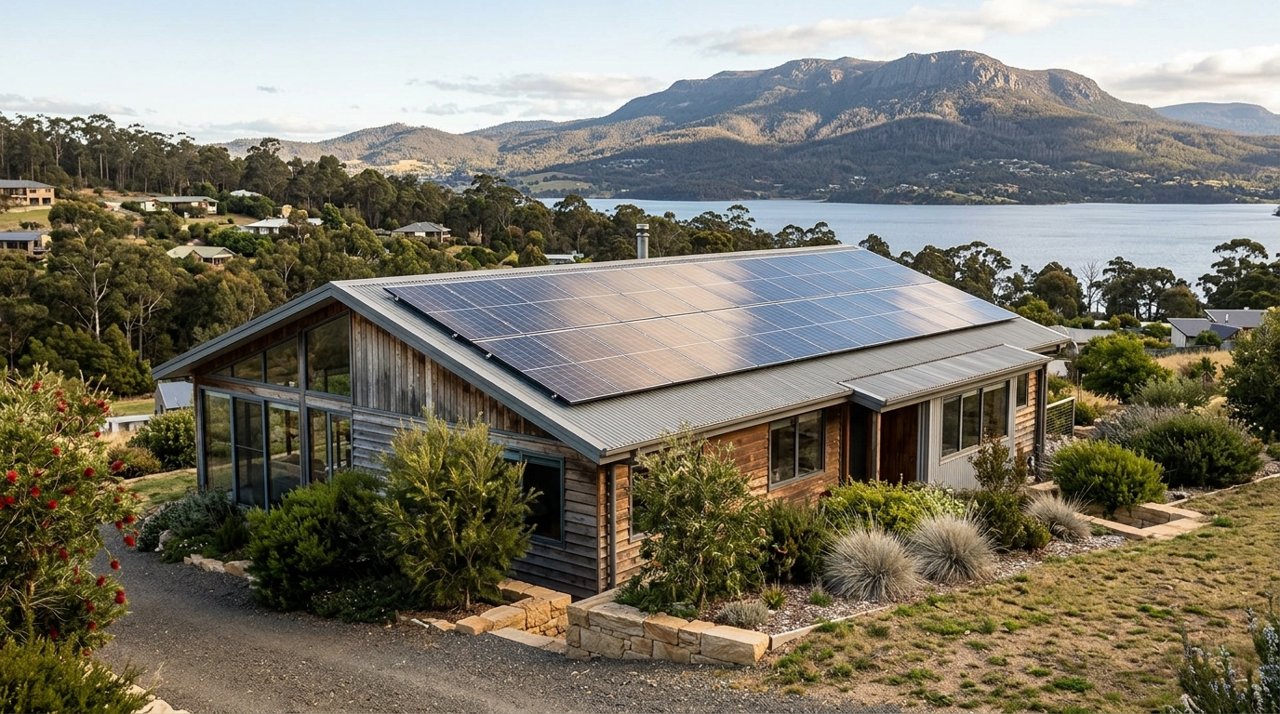
Yes — in most cases, a good solar system does make a Tasmanian home more attractive to buyers, and it can support a stronger sale result. The honest caveat is that there’s no fixed dollar figure: the value tends to show up through buyer appeal, lower running costs and future-proofing rather than a guaranteed premium. Here’s the simple breakdown.
Does solar actually add value when you sell?
Generally, yes — but the value comes from making your home easier to sell and nicer to live in, not from a magic number added to the price. A home with meaningfully lower power bills stands out in the Tasmanian market, especially as more households weigh up electric cars, heat pumps and all-electric living. Buyers increasingly ask about energy running costs during inspections, and a well-documented solar system gives a clear, positive answer.
How much it helps depends on a few practical things: the size and age of the system, whether it’s working well, and whether the paperwork is in order. A ten-year-old 3kW unit tells a very different story from a modern, generously sized system.
What do buyers actually look for in a solar home?
Buyers (and their building inspectors) tend to care about simple, verifiable things rather than brand names. In most cases they’ll want to know:
- System size and age — how many kilowatts of panels, and when they were installed
- Inverter size and type — the inverter often ages faster than the panels
- Evidence it works — recent monitoring data or a couple of power bills showing low imports
- Ownership and paperwork — the system fully paid off, with warranties and install documents available
- Roof condition — panels on a roof that needs replacing soon are a complication, not an asset
If you have these details ready before you list, the solar becomes an easy selling point instead of an unanswered question.
Is a bigger system worth more at sale time?
Often, yes — because buyers are increasingly shopping for a home they can electrify. For most Tasmanian homes planning an EV, heat pump or induction cooking down the track, around 13kW of panels on a 10kW inverter has become the sensible default — a big step up from the old 6.6kW standard. That’s practical because TasNetworks allows a 10kW single-phase inverter in Tasmania, so most homes don’t need a three-phase upgrade, and the 133% oversizing rule lets you pair more panel with that inverter.
The honest flip side: if a home uses very little power and there are no electrification plans, a smaller system can be the smarter fit. Bigger isn’t automatically better — matched-to-lifestyle is what buyers respond to.
Do batteries add value when you sell?
They can — buyers love the idea of backup power and tiny bills — but be realistic about the maths in Tasmania. The federal Cheaper Home Batteries Program, running since 1 July 2025, can take roughly 30% off an eligible battery (around $250 per usable kWh in 2026 at the full rate for the first 14kWh, stepping down for larger batteries, and tapering each year to 2030). The battery must be paired with solar, eligibility rules apply, and there’s no separate Tasmanian state rebate.
Because Tasmania’s power is relatively affordable and the feed-in tariff is fair, a battery generally pays for itself more slowly here than on the mainland — often in the broad seven-to-twelve-year range, depending heavily on your usage and tariff. No vendor VPP program operates in Tasmania, though spot-passthrough retail plans do exist; with automated control, a battery can charge when wholesale prices go negative and avoid peak imports — Solar Generation runs exactly this setup on its own systems. For a typical Aurora Energy household without spot exposure, the real value is self-consumption plus blackout backup — and buyers do respond to that story.
How much do tariffs and rebates matter to buyers?
More than most sellers realise, because they shape the running-cost story. Aurora Energy’s regulated feed-in tariff is modest — about 9.3 cents per kWh from 1 July 2026, up from around 8.9 cents — while the power you import costs roughly 28–30 cents per kWh. In plain terms: the savings come from using your own solar, not from selling it. A buyer who understands self-consumption sees a genuinely cheaper home to run.
On the buying side, the federal STC rebate (Tasmania is in STC Zone 4) discounts the upfront cost of a new system, subject to the usual eligibility rules. For a household that stays and self-consumes, solar has typically paid for itself somewhere in the four-to-six-year range — though the real figure always depends on usage, tariff and system price.
Should you install solar before selling, or leave it to the buyer?
If you’re selling within months, rushing an install rarely stacks up — you won’t have time to recoup the outlay. If you’re staying a few years, installing sooner usually makes more sense, because the bill savings accrue to you and the system is still a selling point later. As a rough guide:
| Your situation | What usually makes sense | Why |
|---|---|---|
| Selling within months | Skip the install; tidy the paperwork | Not enough time to recover the outlay |
| Staying several years | Install now and self-consume | Savings accrue to you; still a selling point later |
| Low usage, no EV plans | A smaller, matched system | No point paying for capacity nobody uses |
| Planning EV, heat pump, induction | Around 13kW, future-proofed | Buyers increasingly expect room to electrify |
What’s the simple takeaway?
If you already have solar: gather the install date, inverter size, warranties and a couple of recent bills or monitoring screenshots before you list — proof beats promises. If you’re staying put for a while: size the system for the home you’re becoming, not the home you were, and let the savings do the talking when sale time comes.
This guide was written by the Tasmanian solar team at Solar Generation Tasmania as a free community resource — we’re always glad to answer questions from locals weighing up their options.
#solargentas #solargen #solargenerationtasmania
Published by Solar Generation Tasmania. General information current as at publication — rebates, tariffs and prices change, so confirm current figures before deciding.
Thinking about solar for your place?
Tell us a little about your home and a local Tasmanian installer will put together a free, no-obligation assessment — system, battery and the rebates you qualify for.
- Honest advice for Tasmanian conditions (Zone 4 sun, hydro grid)
- We apply every rebate you’re eligible for
- Local installers — not a mainland call centre
- SAA-accredited, with degree-qualified owners and 10+ years in tech & solar